Your Digital Transformation Roadmap Guide (Using Excel & AI)

A digital transformation roadmap is your strategic plan for integrating new technology into your business. It's the document that connects every new tool, process, and system to your core business goals, whether that's improving customer experiences, boosting team efficiency, or increasing profitability. In short, it lays out the what, why, and how of your modernization journey so everyone is aligned and working toward the same objectives.
Why You Need a Digital Transformation Roadmap
Let's cut through the jargon. A digital transformation roadmap is a business survival tool. It’s your guide through the often-complex process of modernization, ensuring every dollar spent and every system installed drives the business forward. Attempting this without a plan is like navigating a storm without a map or compass.
Consider a retail business whose website inventory doesn't sync with its in-store stock system. A customer buys an item online, only to receive an "out of stock" email an hour later. This is a classic symptom of disconnected technology—a problem a solid roadmap would have identified and prioritized fixing early on.
Spending too much time on Excel?
Elyx AI generates your formulas and automates your tasks in seconds.
Sign up →The Real Cost of Inaction
Embarking on a major tech overhaul without a clear plan almost always leads to predictable headaches:
- Wasted Resources: Teams get excited about new software that doesn't solve a real business need. You end up with expensive tools nobody uses.
- Fragmented Systems: The marketing team picks one tool, sales picks another, and they don't communicate. This creates data silos and significant operational friction.
- Confused Teams: When priorities are unclear, projects stall, deadlines are missed, and finger-pointing begins.
- Poor ROI: Without a plan to measure success from the start, you'll never be able to prove that your technology investments are paying off.
These aren't minor issues; they can seriously damage your bottom line and leave you trailing the competition. To get a better handle on the full scope of this, it's worth exploring what a digital transformation strategy entails.
From Complex to Manageable with Excel and AI
Building a roadmap can sound intimidating, often bringing to mind expensive consultants and complex project management software. However, you can start effectively with tools you already use. A simple spreadsheet in Excel, when supercharged with AI, can make the entire process feel much more manageable, regardless of your company's size.
The drive to modernize is universal. Global spending on digital transformation is expected to reach a staggering $3.4 trillion by 2026. Yet, only about 35% of these projects deliver their promised value. This gap between spending and success highlights a critical truth: a well-structured roadmap is what separates the winners from the rest. It transforms massive spending into real, measurable results.
A digital transformation roadmap isn’t just an IT document; it's a strategic business asset that aligns your technology, people, and processes toward a single, unified vision for growth and resilience.
Building Your Foundational Assessment
Every solid digital transformation plan starts with an honest, unflinching look at where your business is right now. Think of this as the "you are here" marker on a map. If you skip this part, you’re just setting goals in a vacuum, which almost always leads to wasted time and projects that miss the mark entirely.
The first thing to do is get really sharp on your vision. So many leaders begin with fuzzy ideas like "we need to be more digital" or "let's start using AI." That's not a plan; it's a wish. A strong vision takes those big ideas and turns them into specific, measurable outcomes that actually help the business.
For instance, a manufacturing firm might shift from a vague goal like "modernize our operations" to something concrete: "Implement an automated inventory management system to reduce stock discrepancies by 40% within 18 months." Or a retail business could ditch "improve the customer experience" for a clear target like "Cut customer service response times by 30% by integrating an AI-powered chatbot on our e-commerce platform." See the difference? These objectives give you a real destination and a way to know if you've arrived.
Auditing Your Current State
With a clear vision in hand, it's time to pop the hood and audit your existing technology, processes, and people. This isn't about pointing fingers or finding fault. It's about getting a realistic snapshot of what you have to work with—your capabilities and your limitations.
-
Technology Audit: What systems are actually running the show? A retail company might realize its e-commerce platform isn't mobile-friendly, which explains why so many shoppers are abandoning their carts. A logistics company could discover its supply chain software is a decade old and can't connect with modern tracking tools.
-
Process Audit: How does work actually get done around here? When you map out the key workflows, you might find that your sales and marketing teams use totally separate CRM systems. That creates data silos and means you're leaving money on the table.
-
Skills Audit: Does your team have the right skills for where you're headed? A financial services firm might have a team of Excel wizards, but they may lack experience with the modern data visualization tools needed to uncover deeper, more valuable insights for clients.
A detailed audit helps you pinpoint specific weaknesses and opportunities. It’s what turns your broad roadmap into a targeted, actionable plan. If you jump into buying new tech without this step, you’re just throwing solutions at problems you don’t fully understand. A big piece of this is getting a handle on your data, and you can learn more about that by checking out our guide on what data profiling is and why it matters.
The goal of a foundational assessment isn't just to make a list of your tools and teams. It's to uncover the friction—the broken processes, outdated systems, and skill gaps—that are holding your business back.
This whole process is about moving from fragmented efforts to a unified, strategic direction.
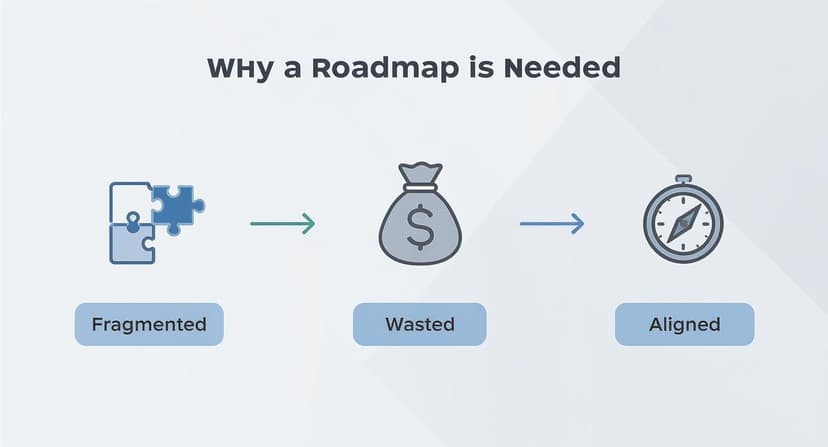
As the graphic shows, without a roadmap, you have disconnected initiatives leading to wasted resources. A clear plan provides the alignment needed to drive real results.
Organizing Your Findings with a SWOT Analysis in Excel
Once you've gathered all this information, you need a simple way to make sense of it all. The classic SWOT (Strengths, Weaknesses, Opportunities, Threats) analysis is perfect for this, and you can build it right in Excel.
Just create a simple four-quadrant table in a new spreadsheet. This gives you a clean structure to categorize everything you uncovered during your audit.
| Strengths (Internal, Positive) | Weaknesses (Internal, Negative) |
|---|---|
| Example: Highly skilled data analytics team | Example: Outdated CRM system with no mobile access |
| Example: Strong brand reputation with a loyal customer base | Example: Manual, paper-based invoicing process |
| Opportunities (External, Positive) | Threats (External, Negative) |
| Example: Growing market demand for personalized services | Example: New competitor with a superior digital experience |
| Example: AI tools available to automate customer support | Example: Increasing cybersecurity risks for our industry |
Laying it all out like this in Excel gives you a powerful, one-page summary of your current reality. It’s no longer just a collection of notes; it’s the evidence-based foundation for your entire roadmap. Every initiative you prioritize from here on out should directly address a real weakness or seize a tangible opportunity you've identified. This approach is absolutely crucial for getting buy-in from stakeholders and setting your transformation up for success.
Designing Your Strategic Initiatives
So, you’ve taken a hard look under the hood and know where your business stands. What's next? This is where you start connecting the dots, turning all those insights from your assessment into real, high-impact projects. It’s easy to end up with a long wish list of ideas, but what you really need is a structured way to figure out which ones will deliver the most value, and fast.
The trick is moving from "wouldn't it be cool if…" to a prioritized action plan. You've got to weigh each potential project by its business impact, what it will cost in time and money, and whether you can realistically pull it off. This simple step keeps you from chasing shiny new tech that doesn't solve a real problem or getting stuck in projects that are just too big to handle.
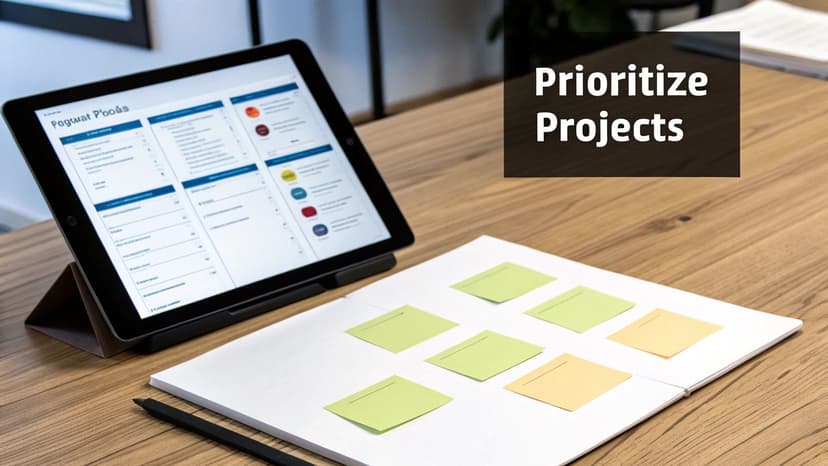
Building a Prioritization Matrix in Excel
A prioritization matrix is one of the best tools for making these tough calls, and you can build a great one right in Excel. It’s essentially a simple grid that helps you score your ideas against a consistent set of criteria. This makes the whole decision-making process transparent and based on data, not just gut feelings or who shouts the loudest in a meeting.
To get started, list all your potential initiatives down the first column. Then, create columns across the top for the factors that matter most to your business. Common criteria include:
- Business Impact: How much will this project move the needle on goals like revenue or market share?
- Customer Value: Will this make life noticeably better for your customers?
- Implementation Cost: Think beyond the price tag. Include software, development hours, training, and ongoing maintenance.
- Technical Feasibility: Do we have the skills and infrastructure in-house to make this work?
You can score each initiative on a simple 1-to-5 scale for each category. A quick SUM formula at the end of each row gives you a total score, making your top priorities immediately visible. This visual approach gets everyone on the same page about why certain projects are getting the green light.
Here's a sample of what that matrix might look like in Excel. It’s a straightforward way to compare competing ideas.
Digital Initiative Prioritization Matrix
| Initiative | Business Impact (1-5) | Customer Value (1-5) | Implementation Cost (1-5) | Technical Feasibility (1-5) | Total Score |
|---|---|---|---|---|---|
| New CRM System | 4 | 3 | 2 | 3 | 12 |
| AI Route Optimization | 5 | 5 | 3 | 4 | 17 |
| E-commerce Platform | 4 | 5 | 2 | 4 | 15 |
| Internal Comms App | 2 | 1 | 5 | 5 | 13 |
As you can see, the AI Route Optimization project comes out on top. Even though its cost and feasibility aren't perfect, its massive impact on the business and customers makes it the clear winner. This kind of clarity is invaluable.
Using AI in Excel to Sharpen Your Priorities
You can take this a step further by using AI capabilities directly within Excel. Instead of just guessing what provides customer value, you can use AI to analyze real customer feedback. Imagine you have a spreadsheet with thousands of customer support tickets or online reviews.
With an AI tool like Elyx.AI, you can ask a simple question in plain English, like: "Summarize the top 5 most common customer complaints from this data." The AI will instantly analyze the text and surface recurring themes—such as "slow delivery times" or "confusing website navigation." This is gold. It allows you to prioritize projects that solve problems your customers are actually complaining about, dramatically increasing your chances of success.
A data-driven prioritization matrix ensures your digital transformation roadmap is focused on solving real-world problems. It shifts the conversation from "what we think is important" to "what the data tells us will create the most value."
Real-World Scenario: A Logistics Company at a Crossroads
Let’s picture a mid-sized logistics company. After their assessment, they've identified two potential projects:
- Overhauling their sales process with a modern CRM system.
- Building an AI-powered route optimization tool to cut fuel costs and delivery times.
Both sound great, but they can't afford to do both right now. So, the leadership team uses their prioritization matrix in Excel. The CRM scores well on business impact, but the cost is high and it will require months of team training, giving it a low feasibility score.
The AI route optimization system, on the other hand, scores off the charts on both business impact (direct cost savings) and customer value (faster deliveries). It's technically complex, but a pilot program is doable. The matrix makes the choice obvious: the route optimization project is the clear priority.
This disciplined approach is critical. By 2025, it's estimated that 90% of new enterprise applications will have AI-powered features. Companies that thrive will be those with structured plans; they see up to three times higher success rates. The latest digital transformation statistics really drive home why a clear, data-informed plan for selecting projects is no longer optional.
Putting Your Roadmap Into Action
Alright, you've done the hard work of prioritizing your most impactful initiatives. Now comes the exciting part: turning that strategic document into real, tangible projects. This is where the rubber meets the road, and success boils down to clear ownership, realistic timelines, and a smart plan for managing the human side of change.
The first move is to take each big idea on your roadmap and break it down into a detailed project plan. This isn't just a to-do list. It’s about assigning a single, accountable owner for every project. When one person is responsible for driving progress and clearing roadblocks, confusion disappears, and things actually get done.
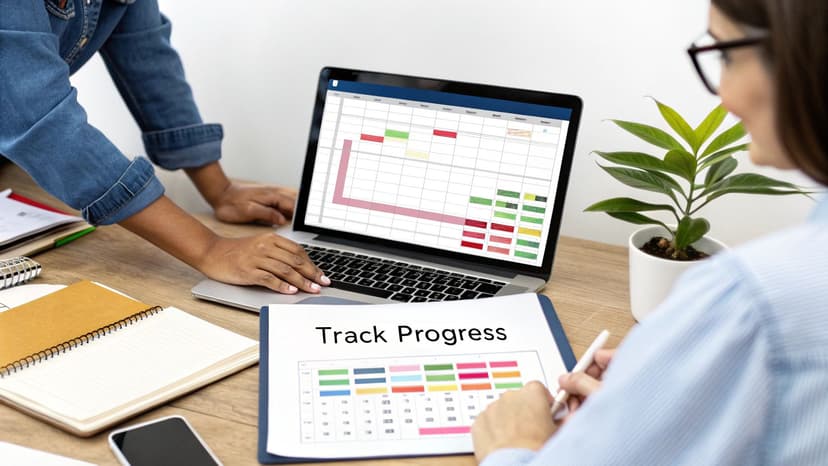
From Plan to Action with Excel
You don't need fancy, expensive software to manage all the moving parts. A well-built Gantt chart in Excel can be a surprisingly powerful tool for visualizing your entire project from start to finish. It helps you map out every task, set deadlines, and instantly see which activities depend on others.
Here's what your Gantt chart should absolutely track:
- Key Milestones: These are the big wins, like "Platform Beta Launch" or "Team Training Complete." Mark them clearly.
- Task Dependencies: Show which tasks can't start until others are finished. This is crucial for avoiding bottlenecks down the line.
- Resource Allocation: Who is doing what? Assign people to tasks to make sure workloads are balanced and you have the right talent on the job.
- Budget Tracking: Keep a close eye on the money. Have columns for your planned budget versus actual spending to keep financials on track.
As you get deeper into execution, you might find that certain manual processes are slowing you down. Looking into the right business process automation tools can be a great way to streamline those repetitive tasks and free up your team.
Don't Forget the People
Here’s a hard truth: the most critical part of this whole process is change management. You can have the best tech in the world, but if your team doesn't get why they need it or how to use it, the project is dead in the water. Gartner found that 91% of businesses are working on digital initiatives, but success almost always comes down to getting employees on board.
This isn’t about sending one mass email and calling it a day. Good change management is a constant effort focused on communication, training, and support. The goal is to build excitement, not resistance.
The human element is the ultimate dependency in any digital transformation roadmap. Proactive change management turns potential resistance into enthusiastic adoption, ensuring your technology investment delivers its full value.
A Real-World Healthcare Example
Imagine a regional healthcare group rolling out a new telehealth platform. It's a huge initiative on their roadmap, designed to give patients better access to care and ease the burden on their clinics. They know this will be a big shift for both staff and patients, so they build their change management plan right from the start.
Their Communication Playbook:
- Start Early, Communicate Often: Months before the launch, they started talking about the "why." They shared stories about how telehealth would help overworked nurses and make it easier for elderly patients to see a doctor.
- Tailor the Message: No one-size-fits-all emails. Doctors got updates on the clinical benefits and how it fit into their workflow. Admin staff learned how it would simplify scheduling.
- Create a Two-Way Street: They ran town hall meetings and opened a dedicated feedback channel so people could ask tough questions and feel heard.
Their Training Game Plan:
- Role-Specific Training: Doctors and nurses walked through simulated virtual appointments. The administrative team had separate sessions focused on the new scheduling and billing tools.
- Patient-Friendly Guides: They created simple how-to videos and printed guides for patients, showing them exactly how to log on and connect with their doctor.
- On-the-Ground Support: After launch, they designated a few tech-savvy employees as "super users." These were the go-to people for immediate help, which took a massive load off the IT helpdesk.
By focusing just as much on the people as they did on the platform, the healthcare provider had a smooth rollout. That proactive approach to the human side of the equation is what turns a great plan into a real-world success.
Measuring Success and Adapting Your Roadmap
A great digital transformation roadmap is never really "done." The moment you launch your first project, the plan starts to evolve. You have to think of it as a living document, not a rigid blueprint carved in stone. The real work isn't just executing the plan; it's monitoring what’s working, what isn’t, and being ready to change course based on what the data is telling you. This agility is what separates the successes from the expensive failures.
It all starts with getting your metrics right. You need to move beyond vanity numbers and define Key Performance Indicators (KPIs) that tie directly back to the business goals you set at the very beginning. If a project’s goal was to boost efficiency, a good KPI would be something concrete like “Reduction in Manual Data Entry Hours” or “Decrease in Order Processing Time.” Vague metrics won't help you make tough decisions down the line.
Visualizing Progress with an Excel Dashboard
Once you have solid KPIs, you need a way to see them clearly and quickly. You don’t need to invest in a fancy, expensive software suite right away. A well-designed dashboard in Excel can give leaders a powerful, at-a-glance view of how the entire transformation is progressing. The idea is to pull data from your different project trackers and present it in a clean, visual format.
For maximum impact, your Excel dashboard should feature a few key things:
- Overall Roadmap Health: A simple color-coded status (Green, Yellow, Red) for each major initiative. It’s a quick gut check.
- KPI Tracking: Charts showing how each project’s key metric is trending over time compared to its target. Are you climbing the mountain or sliding back down?
- Budget vs. Actuals: A clear bar graph comparing planned spend to actual spend. No surprises.
- Milestone Completion: A simple progress bar that shows the percentage of key milestones hit.
This kind of visual reporting makes it dead simple to spot which projects are humming along and which ones are starting to wobble. It lets you step in and help before a small issue becomes a major roadblock.
Establishing Feedback Loops and Regular Reviews
Data is critical, but it only tells you half the story. You also need to build in consistent feedback loops and a regular rhythm for reviews. This means scheduling quarterly—or even monthly—check-ins with project owners to talk openly about progress, challenges, and what everyone is learning. These aren't just status updates; they’re strategy sessions to decide what adjustments the roadmap needs.
To make those adjustments intelligently, establishing robust business intelligence best practices is a non-negotiable part of the process.
The goal of a review isn't to assign blame for what's going wrong. It's a collective opportunity to ask, "Based on what we know now, what's the smartest way forward?"
If you look at this on a macro scale, China’s national digital transformation is a fascinating case study. With projected spending set to hit $733 billion by 2028, their strategy is built on agility and leapfrogging legacy systems. In fact, nearly 49% of Chinese enterprises plan to adopt cloud-native architectures by 2025, which allows them to innovate at a blistering pace. Their approach shows how an adaptable roadmap, when properly funded, can accelerate growth and completely reset the competitive landscape.
A Real-World Example of Agile Adaptation
Let's make this tangible. An e-commerce company launched a major website redesign as a cornerstone of their roadmap. The initial plan was all about a sleek, minimalist aesthetic. But three months in, their Excel KPI dashboard told a worrying story. Site traffic was up, but the "add to cart" rate was flat, and average time on site had actually decreased.
Instead of stubbornly pushing forward, they paused. The team used AI tools to analyze user session recordings and customer feedback surveys, and they found the culprit: shoppers were confused by the new navigation. It was too minimalist. Armed with that data, they pivoted the project. They rolled back some design changes, bringing back clearer menus and more obvious product categories.
The result? The "add to cart" rate jumped by 18% in the following month.
That’s the power of an adaptive roadmap in action. By combining the hard data from their Excel dashboard with real human feedback, they made a tough but incredibly smart decision that saved the project. That willingness to listen to the data and change course is what successful transformation is all about.
Common Questions About Digital Transformation Roadmaps
Even the best-laid plans come with questions. When you're dealing with something as big as a digital transformation roadmap, it's natural for a few hurdles to pop up. Let's walk through some of the most common ones I hear from leaders and their teams.
How Do We Actually Get Executive Buy-in?
Forget the tech jargon. When you're talking to executives, you need to speak their language: business outcomes. Your entire pitch has to be framed around ROI, cost savings, and new revenue. It's that simple.
Go back to the data you gathered during your initial assessment. That's your goldmine. Build a business case that shows the real financial cost of doing nothing—of sticking with the status quo. An Excel chart projecting those losses can be incredibly powerful. Then, contrast that with a phased plan that promises a tangible, high-impact win within the first six months. Nothing builds trust and secures long-term support like delivering value early.
Executive buy-in isn't about getting a signature on a project plan. It's earned by proving that your roadmap is a core business strategy, not just another IT expense.
What's the Single Biggest Mistake We Can Make?
Hands down, the biggest mistake is treating this like a technology problem for the IT department to solve. That's a surefire way to fail. Why? Because real transformation is a cultural change. It’s about how people work and how the business operates, not just about new software.
To avoid this trap, you have to build a cross-functional leadership team right from the start. Pull in leaders from operations, marketing, finance, HR—everyone with skin in the game. This makes sure the digital transformation roadmap serves the entire company and creates a sense of shared ownership. It shifts the conversation from "the IT project" to "our plan for growth."
How Far Out Should We Be Planning?
A smart roadmap has two horizons. You need a high-level, strategic vision that looks out three to five years—that's your North Star. But the detailed, nuts-and-bolts part of your plan? That should focus intensely on the next 12 to 18 months. This timeframe is perfect for tackling foundational projects and banking those quick wins that get everyone excited.
The reality is that technology and markets move too fast for a rigid five-year plan to be anything but a fantasy. Your roadmap needs to be a living document. Get in the habit of reviewing and adjusting it every quarter. This agile rhythm lets you adapt to new tools, react to competitors, and learn from your early projects.
Can a Small Business Pull This Off Without a Huge Budget?
Absolutely. For a small business, a digital transformation roadmap is about being scrappy and strategic, not about outspending the competition. The secret is to zero in on high-impact, low-cost initiatives that solve a real, nagging problem.
Here are a few practical, Excel-based ideas:
- Automate Reporting: Use Excel with an AI add-in like Elyx.AI to automate mind-numbing reporting tasks that steal hours every week. It's a small investment that buys back a ton of time.
- Embrace Cloud Tools: Ditch expensive servers. Affordable Software-as-a-Service (SaaS) tools can handle everything from accounting to customer management, many of which integrate with Excel.
- Use Free Analytics: You can get incredibly deep customer insights from tools like Google Analytics without spending a cent, then analyze that data within Excel to find opportunities.
For a small or medium-sized business, an effective roadmap is built on smart, incremental improvements. Each small win should deliver real value, creating a self-funding engine for the bigger moves you want to make down the line.
Ready to bring AI into your daily Excel work? Elyx.AI plugs directly into your spreadsheets, letting you generate insights, clean up data, and write complex formulas just by asking in plain English. It's a simple first step that can make a huge difference. Learn more and see what's possible with Elyx.AI.
Reading Excel tutorials to save time?
What if an AI did the work for you?
Describe what you need, Elyx executes it in Excel.
Sign up