Your Ultimate Audit Preparation Checklist: 10 Steps for 2025

Facing an audit can feel overwhelming, but with the right preparation, it becomes a straightforward process of verification rather than a stressful ordeal. This guide provides a comprehensive audit preparation checklist, breaking down the complex process into 10 manageable steps designed to build confidence and ensure compliance. We'll focus on practical, actionable tasks you can perform directly within Excel, enhanced with the power of AI tools to automate and simplify data analysis.
The goal is to transform your audit preparation from a reactive scramble into a proactive strategy. Forget disorganized files and last-minute panic. This checklist is your roadmap to organizing documentation, validating internal controls, and reconciling key accounts with precision. By following these steps, you will not only satisfy auditor requirements efficiently but also uncover valuable insights into your own financial operations. You'll learn how to use familiar tools like Excel, augmented with AI, to ensure you are organized, compliant, and confident when the auditors arrive. Let's get started.
1. Document Collection and Organization
The cornerstone of any successful audit is a well-organized and complete collection of your financial documents. This foundational step involves gathering all relevant records, contracts, policies, and supporting documentation into a centralized, easily accessible repository. A structured approach here prevents last-minute scrambling and demonstrates your organization's commitment to transparency and preparedness, setting a positive tone for the entire audit process.
Spending too much time on Excel?
Elyx AI generates your formulas and automates your tasks in seconds.
Sign up →
Think of this as building the library the auditors will use to understand your business. For instance, a multinational corporation might leverage a secure cloud platform like SharePoint, creating dedicated folders for each audit area. A smaller firm could implement a meticulously organized physical filing system, using color-coding to distinguish between fiscal years or document types like invoices, bank statements, and payroll records. This methodical organization is a critical part of a comprehensive audit preparation checklist.
Actionable Tips for Implementation
- Create a Document Index in Excel: Before the audit begins, provide auditors with an index or a master list of all prepared documents. This simple spreadsheet can link directly to digital files or reference physical folder locations, saving significant time. Use Excel's hyperlink function to create a dynamic, easy-to-navigate master file.
- Leverage Cloud-Based Systems: Use platforms like Google Drive, Box, or dedicated data rooms. This provides secure, remote access for auditors and creates a clear digital trail of who accessed which documents and when.
- Establish Clear Retention Policies: Ensure your document retention policies align with legal and regulatory requirements. Systematically archive old records and properly dispose of documents that are no longer needed, reducing clutter and potential confusion.
- Verify Document Integrity: Scan or review all documents for legibility and completeness. A missing signature on a contract or a faded, unreadable receipt can cause unnecessary delays and raise questions.
2. Internal Controls Assessment and Testing
Evaluating your internal control systems before the external audit is a crucial proactive measure. This process involves a thorough review of the policies and procedures designed to safeguard assets, ensure financial reporting accuracy, and promote operational efficiency. A pre-audit assessment of your controls allows you to identify and rectify weaknesses, demonstrating a commitment to robust governance and risk management before auditors even arrive.
Think of this as a dress rehearsal for the main event. For example, a publicly traded company will perform a walkthrough of its Sarbanes-Oxley (SOX) controls, testing everything from purchase order approvals to financial statement close processes. Similarly, a financial services firm might test its anti-fraud controls by running mock scenarios. This internal review is an essential part of a comprehensive audit preparation checklist, allowing you to address issues on your own terms.
Actionable Tips for Implementation
- Reference a Known Framework: Use an established standard like the COSO Internal Control Framework as a benchmark. This provides a structured approach to evaluating the five key components of internal control: control environment, risk assessment, control activities, information and communication, and monitoring.
- Document All Testing Procedures in Excel: Meticulously record how each control was tested, the evidence reviewed, and the results of the test in an Excel workbook. This documentation provides a clear audit trail and demonstrates the rigor of your internal assessment.
- Involve Process Owners: Engage the individuals who perform the controls daily. Their firsthand knowledge is invaluable for identifying practical gaps and developing effective remediation plans for any weaknesses discovered.
- Create and Execute Remediation Plans: For every control deficiency identified, develop a clear, actionable plan to fix it. Use an Excel spreadsheet to track each issue, assign ownership, set deadlines, and monitor progress to ensure all known issues are resolved before the external audit begins.
3. General Ledger Reconciliation and Account Analysis
The integrity of your financial statements hinges on an accurate and thoroughly reconciled general ledger (GL). This critical process involves methodically verifying that the balances in your GL accounts match the supporting subsidiary ledgers and external documentation. It's about ensuring every transaction is correctly recorded, classified, and substantiated, which eliminates discrepancies before auditors even arrive.
Think of the GL as the central nervous system of your accounting. For example, a manufacturing firm must reconcile its work-in-progress (WIP) account in the GL with detailed job cost reports. Similarly, a retail company verifies that its inventory control account balance matches the total value from its point-of-sale and warehouse management systems. This level of detail is a non-negotiable part of any robust audit preparation checklist and showcases strong internal controls.
Actionable Tips for Implementation
- Prioritize High-Risk Accounts: Begin your reconciliation efforts with accounts that have high volume, high value, or are prone to estimation errors, such as accounts receivable, inventory, and revenue.
- Document Every Reconciling Item: For any discrepancy, create clear documentation explaining the nature of the item (e.g., timing difference, bank error), its value, and the plan for its resolution. Use a standardized Excel template for consistency across all account reconciliations.
- Investigate Significant Variances: Set a materiality threshold and diligently investigate any variances that exceed it. A small, unexplained difference could signal a larger, systemic issue. To learn more about how technology can streamline this, you can explore detailed guides on data reconciliation.
- Use AI in Excel to Automate Analysis: For accounts with large transaction volumes, use AI-powered Excel add-ins to automate the matching of thousands of transactions, identify outliers, and flag potential errors. This drastically reduces manual effort and improves accuracy, turning a multi-day task into a quick analysis.
4. Accounts Receivable Aging and Allowance Evaluation
A critical part of financial statement accuracy rests on how you value outstanding customer balances. This step involves a detailed analysis of your accounts receivable (A/R), categorizing them by age to assess their collectibility. By scrutinizing older invoices and evaluating the adequacy of your allowance for doubtful accounts, you ensure that your receivables are stated at their net realizable value, providing a true and fair view of your company's assets.
This process is more than just running a report; it's about building a defensible position for your balance sheet figures. For example, a B2B services firm might review the payment history and financial health of clients with invoices over 90 days past due. Similarly, a technology company would evaluate the collection risk for SaaS customers who have signaled potential churn. A thorough review as part of your audit preparation checklist gives auditors confidence in your financial reporting.
Actionable Tips for Implementation
- Build a Dynamic Aging Report in Excel: Export your raw A/R data to Excel and use PivotTables to create a dynamic aging report. This allows you to easily slice and dice data by customer, region, or product line, and add columns for notes on collection efforts and management’s assessment.
- Document Your Allowance Methodology: Clearly document the basis for your allowance for doubtful accounts calculation in an Excel model. Whether you use a historical percentage, a risk-based assessment, or a combination, the logic must be clear, consistently applied, and easy for an auditor to follow.
- Prepare Customer Confirmations: Proactively identify a sample of customer balances that auditors are likely to test. Prepare draft confirmation letters or have contact information ready to expedite the auditor's confirmation process.
- Factor in Economic Conditions: Your analysis should consider current economic trends and specific industry-related risks that could impact your customers' ability to pay. This demonstrates a forward-looking and prudent approach. You can learn more about how to conduct an accounts receivable aging analysis on getelyxai.com.
5. Inventory Observation Preparation and Documentation
For businesses holding physical stock, the inventory observation is a critical audit procedure where auditors physically verify the existence and condition of your inventory. Proper preparation ensures this process is smooth, accurate, and efficient, preventing disruptions to your operations and potential audit adjustments. It involves meticulously planning the physical count, documenting procedures, and coordinating with both internal teams and the audit firm to facilitate their testing.
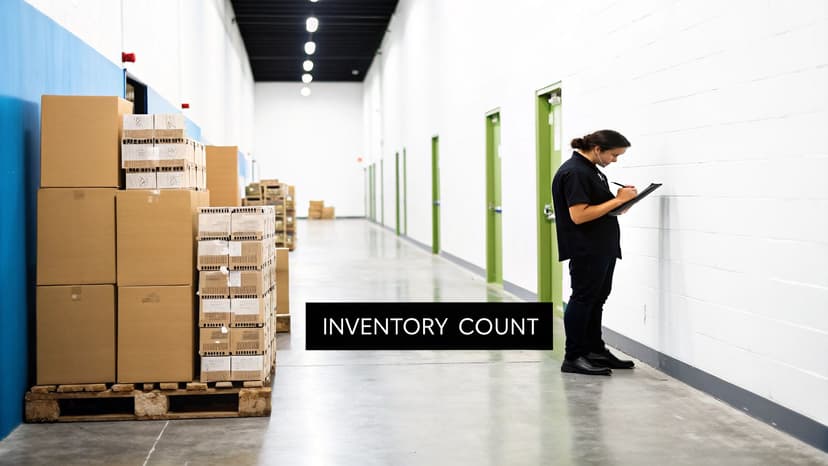
Think of it as staging a well-rehearsed play for the auditors. For instance, a retail chain will prepare detailed maps of each store's stockroom and sales floor, ensuring all locations are covered. A manufacturing company might halt production in specific zones to allow for an organized count, with clear instructions for count teams. This level of organization is an indispensable part of a thorough audit preparation checklist, demonstrating strong internal controls over a significant asset.
Actionable Tips for Implementation
- Establish Clear Cutoff Procedures: Coordinate with your shipping and receiving departments to halt all inventory movements during the physical count. Use a shared Excel log to document the last shipping invoice number and receiving report number issued before the count begins to ensure transactions are recorded in the correct period.
- Prepare Detailed Count Instructions: Create a clear, step-by-step guide for your count teams. Include maps of the count areas, sample count tags, and instructions on how to identify and segregate damaged, obsolete, or slow-moving items for auditor review.
- Conduct Pre-Counts and Reconciliations: Perform test counts in key areas before the official observation date. Use Excel’s VLOOKUP or XLOOKUP functions to quickly compare test count data against your inventory system records, identifying discrepancies for investigation.
- Organize and Stage Inventory: Ensure the warehouse or stockroom is clean, organized, and safe. Clearly label all sections, and if possible, use barcode or RFID systems to streamline the counting process and enhance accuracy for both your team and the auditors.
6. Fixed Assets Register Verification and Depreciation Review
Ensuring your fixed assets are accurately recorded and valued is a critical component of financial integrity. This step involves a thorough verification of your fixed assets register, reconciling it with the general ledger, and reviewing your depreciation calculations. A meticulous approach here prevents material misstatements and demonstrates strong internal controls over significant company investments, a key focus in any comprehensive audit preparation checklist.
Think of this as a physical and financial check-up for your company's most valuable tangible assets. A manufacturing plant, for instance, would physically inspect machinery on the factory floor and match serial numbers to the asset register. Similarly, a technology company would conduct an inventory of its servers and high-value computer equipment, confirming their existence, condition, and location. This process validates that the assets reported on the balance sheet truly exist and are valued correctly.
Actionable Tips for Implementation
- Conduct Periodic Physical Inspections: Don't wait for the audit. Perform regular physical verifications of assets throughout the year to identify and resolve discrepancies, such as unrecorded disposals or "ghost assets," in a timely manner.
- Maintain a Detailed Register in Excel: Your asset register in Excel should include more than just cost and date. Add detailed descriptions, serial numbers, physical locations, and even photos for high-value items to make verification seamless for the audit team.
- Recalculate Depreciation on Significant Assets: For your most valuable assets, manually recalculate the depreciation expense for the period using Excel's depreciation functions (like SLN, DB, or DDB). This proactive check can catch systemic formula errors in your accounting software before auditors do.
- Document Capitalization and Disposal Policies: Clearly define and document your company's policy for capitalizing assets (e.g., all purchases over $5,000) and its process for retiring and disposing of assets. This provides auditors with a clear framework for their testing.
7. Accounts Payable Reconciliation and Accrual Review
Ensuring your liabilities are accurately stated is a critical component of financial integrity. This step involves a thorough verification of accounts payable balances against vendor statements and a detailed review of accrued liabilities to confirm they are complete and recorded in the correct period. Properly executing this process demonstrates strong internal controls and prevents material misstatements of your company’s obligations, a key focus area for any auditor.
Think of this as validating every IOU your business has. A retail company, for example, would reconcile its internal payable records for each major supplier with the statements received from those suppliers, investigating any discrepancies like unrecorded invoices or disputed charges. Likewise, a construction firm must diligently review its subcontractor accruals to ensure all work performed before the period end is properly accounted for, even if the invoice arrives later. This diligent verification is a non-negotiable part of a robust audit preparation checklist.
Actionable Tips for Implementation
- Request Vendor Statements Proactively: Don't wait for the auditors. Request statements from your key vendors well in advance of the audit fieldwork to give yourself ample time to reconcile accounts and resolve any differences.
- Perform Cutoff Testing with AI in Excel: Export payables data from just before and after the period end into Excel. Use AI tools to quickly analyze invoice dates versus receipt dates, automatically flagging transactions that may be recorded in the wrong period, ensuring an accurate liability cutoff.
- Validate Accrual Calculations: For every accrued expense, ensure there is clear supporting documentation that justifies the amount. This could include contracts, purchase orders, or detailed calculations in an Excel worksheet for items like bonuses or professional fees. For more insights, explore these accounts payable best practices.
- Document All Reconciling Items: Create a clear and detailed Excel schedule of any differences found between your records and vendor statements. For each item, provide an explanation and note the steps taken to resolve it.
8. Bank Reconciliation and Cash Account Verification
A meticulous bank reconciliation process is fundamental to verifying the accuracy of your cash balance, one of the most scrutinized areas in any audit. This step involves systematically matching the cash balances on your company's balance sheet to the corresponding amounts on its bank statements. Properly executed, this process identifies discrepancies, uncovers potential errors, and confirms that your recorded cash position is accurate and complete, which is a critical element of any thorough audit preparation checklist.

This verification goes beyond a simple balance check; it requires a deep dive into reconciling items like outstanding checks and deposits in transit. For example, a multi-location retailer must reconcile accounts for each store, ensuring regional cash handling aligns with corporate records. Similarly, a non-profit must meticulously document that restricted donations are held in the correct accounts and used according to donor stipulations, providing auditors with a clear and defensible trail of all cash movements.
Actionable Tips for Implementation
- Scrutinize Old Items in Excel: Export your list of outstanding checks and reconciling items into Excel and use conditional formatting to highlight anything older than 60-90 days. This quickly draws attention to potential stale checks or accounting errors that require correction.
- Document Every Adjustment: For each reconciling item, provide a clear, concise explanation. Whether it’s an outstanding check, a deposit in transit, or a bank service fee, clear documentation in your Excel reconciliation template prevents auditor questions and speeds up their review process.
- Verify Restricted Cash: If your organization holds restricted cash, ensure it is properly classified and disclosed. Provide auditors with the supporting documentation, such as grant agreements or donor letters, that outlines the restrictions.
- Confirm Cutoff Accuracy: Obtain the final bank statements for the fiscal year-end, along with the first statement from the subsequent period. This helps auditors perform bank cutoff procedures to confirm that transactions are recorded in the correct accounting period.
9. Debt and Equity Agreement Review and Compliance Documentation
A thorough review of all debt and equity agreements is crucial for ensuring accurate financial reporting and demonstrating compliance. This step involves a deep dive into loan covenants, equity commitments, and any related-party transactions to confirm that all terms are being met and are correctly reflected in your financial statements. Diligent documentation here prevents potential non-compliance issues and provides auditors with a clear picture of your company's financing structure and obligations.
This process is a non-negotiable part of any robust audit preparation checklist, especially for growing companies managing multiple credit lines or private equity-backed firms tracking complex investor terms. For example, a manufacturing firm with equipment financing must demonstrate it meets specific debt-to-equity ratios required by its lender. A real estate developer must prove compliance with construction loan terms at each draw. This proactive review builds confidence and streamlines the audit.
Actionable Tips for Implementation
- Create a Comprehensive Debt Schedule in Excel: Develop a master Excel spreadsheet listing all debt, including lenders, interest rates, maturity dates, and key covenant requirements. This centralized document is invaluable for both your team and the auditors.
- Build a Covenant Compliance Dashboard: Before the audit, perform your own calculations for all financial covenants (e.g., debt service coverage ratio, current ratio) in an Excel dashboard. Link directly to the source data in your financials so that auditors can easily verify the figures.
- Document Covenant Waivers or Amendments: If you have received any waivers or modified loan terms during the period, ensure all related correspondence and formal amendments are documented and readily available.
- Identify and Document Related-Party Terms: Clearly detail any loans, investments, or transactions with owners, executives, or affiliated companies. Auditors will scrutinize these for proper disclosure.
10. Tax Provision and Compliance Preparation
Properly addressing your tax obligations is a critical component of any financial audit, moving beyond simple compliance to demonstrate robust internal controls over tax accounting. This step involves meticulously preparing tax provision calculations, documenting all tax positions, and ensuring that filings are both accurate and timely. Auditors will closely scrutinize how you account for income taxes, including deferred tax assets and liabilities, and any uncertain tax positions, making this a high-stakes area of your audit preparation checklist.
Think of this as creating a clear, defensible map of your company's tax landscape for the auditors. For example, a technology firm must accurately document its R&D tax credit claims, while a multinational corporation needs detailed transfer pricing studies to support its intercompany transactions. A well-prepared tax provision workpaper, compliant with standards like ASC 740, shows auditors that your tax accounting is methodical and transparent, not an afterthought.
Actionable Tips for Implementation
- Prepare a Detailed Tax Provision Workpaper in Excel: Create a comprehensive Excel workbook that bridges the gap between your book income and taxable income. This should clearly detail all permanent differences (e.g., non-deductible expenses) and temporary differences (e.g., depreciation), with formulas that are easy for auditors to follow.
- Engage Tax Advisors Early: Don't wait until the audit is underway. Involve your internal or external tax specialists early in the planning process to review complex positions and recent legislative changes, ensuring alignment with accounting principles.
- Document Uncertain Tax Positions: Identify and thoroughly document any tax positions where the outcome is uncertain. Discuss these with legal and tax counsel to determine the appropriate accounting treatment and disclosure requirements.
- Reconcile Filings to Financials: Ensure that the income tax expense reported in your financial statements reconciles with your filed tax returns. To streamline your annual tax preparations and ensure audit readiness, utilize our comprehensive Business Tax Checklist to cover all necessary bases.
10-Point Audit Preparation Comparison
| Task | Process / Complexity 🔄 | Resources & Expertise ⚡ | Expected Outcome ⭐ | Ideal Use Cases 💡 | Key Advantages 📊 |
|---|---|---|---|---|---|
| Document Collection and Organization | Moderate → high initial setup; low maintenance | Staff time, DMS/cloud storage, Excel indexing | Centralized audit-ready repository; fewer info requests | All organizations; multi-location or high-document environments | Faster audits; clearer evidence; easier gap ID |
| Internal Controls Assessment and Testing | High — requires structured testing and documentation | Internal control specialists, Excel for tracking, process owners | Control deficiencies identified and remediated pre-audit | SOX/regulated entities; high-risk processes | Reduces findings; improves governance and monitoring |
| General Ledger Reconciliation and Account Analysis | High — account-by-account, time-consuming | Experienced accountants, AI-powered Excel tools | Accurate financials; fewer audit adjustments | Large orgs, intercompany activity, high transaction volume | Detects errors early; supports management review |
| Accounts Receivable Aging & Allowance Evaluation | Medium–high — judgment-heavy analyses | AR team, Excel PivotTables, customer confirmations | Net realizable receivables validated; allowance supported | B2B services, healthcare, SaaS firms | Identifies collection issues; reduces audit sample size |
| Inventory Observation Preparation & Documentation | High — operational coordination and physical counts | Operations staff, count teams, Excel for reconciliations | Smooth auditor observation; accurate physical inventory | Retail, manufacturing, wholesale distributors | Lowers testing costs; catches obsolescence |
| Fixed Assets Register Verification & Depreciation Review | Medium–high — physical inspections and calculations | Asset managers, Excel register, depreciation formulas | Correct capitalization and depreciation; fewer misstatements | Manufacturing, real estate, capex-heavy firms | Prevents ghost assets; supports tax/compliance |
| Accounts Payable Reconciliation & Accrual Review | Medium — vendor coordination and cutoff testing | AP staff, vendor statements, AI tools in Excel | Complete liability recognition; accurate accruals | Construction, retail, manufacturing | Prevents understated liabilities; improves cash forecasting |
| Bank Reconciliation & Cash Account Verification | Medium — recurring reconciliations, investigation of items | Treasury/accounts staff, bank statements, Excel templates | Confirmed cash balances; fraud/error detection | Multi-account firms, nonprofits, multi-location retailers | Increases audit confidence; uncovers anomalies |
| Debt & Equity Agreement Review & Compliance Documentation | High — legal and covenant complexity | Finance, legal counsel, Excel covenant dashboard | Proper classification; documented covenant compliance | PE-backed, growing companies, real estate, financed firms | Avoids covenant breaches; clarifies disclosures |
| Tax Provision & Compliance Preparation | High — specialized tax computation and judgment | Tax specialists, tax software, Excel workpapers | Accurate tax provision and disclosures; lower tax risk | Multi-jurisdictional and R&D-heavy companies, REITs | Reduces tax audit issues; ensures provision accuracy |
Beyond the Checklist: Cultivating a Culture of Audit Readiness
Completing every item on this extensive audit preparation checklist is a critical step toward a successful audit. You’ve meticulously gathered documentation, reviewed internal controls, and reconciled key accounts from fixed assets to accounts payable. This diligent preparation sets the stage for a smoother, more efficient process, minimizing surprises and demonstrating your commitment to financial integrity. However, the true value of this exercise extends far beyond simply passing an annual review.
The ultimate goal is to transition from a reactive, last-minute sprint to a proactive, continuous state of preparedness. Think of the audit not as a final exam, but as a validation of the robust financial practices you maintain throughout the year. This shift in mindset transforms audit preparation from a periodic burden into an ongoing operational standard that strengthens your entire organization.
Key Takeaways for Continuous Compliance
To make audit readiness a part of your company’s DNA, focus on integrating the principles of the checklist into your daily and monthly workflows.
- Systematize Documentation: Don't wait for an audit request to organize invoices, contracts, and bank statements. Implement a clear, digital-first filing system and make it a non-negotiable part of your team's routine.
- Automate Reconciliation with AI in Excel: Leverage the power of AI tools directly within Excel to automate routine tasks like bank and general ledger reconciliations. This frees up your team to focus on anomaly detection and strategic analysis rather than manual data entry, making monthly closes faster and more accurate.
- Embed Internal Controls: Make control testing a regular activity, not just a pre-audit task. Monthly or quarterly spot-checks of processes like expense approvals or inventory counts can identify and correct issues long before an auditor does.
The Power of Proactive Financial Management
By adopting this year-round approach, you unlock significant benefits that ripple across your business. Continuous readiness enhances the accuracy of your financial data, leading to more informed strategic decisions. It fosters a culture of accountability and transparency, which builds trust with investors, lenders, and your board. Ultimately, true confidence comes from proactively establishing systems and practices that contribute to cultivating a culture of audit readiness. This approach turns a compliance requirement into a powerful competitive advantage.
View your next audit as an opportunity to showcase the excellence and efficiency of your financial operations. The work you do today using this audit preparation checklist is the foundation for a resilient, transparent, and successful financial future.
Ready to transform your audit preparation from a manual marathon into an automated, intelligent process? Discover how Elyx.AI can streamline your data analysis and reconciliation tasks directly within Excel, helping you maintain a state of continuous audit readiness. Visit Elyx.AI to see how our AI-powered tools can revolutionize your workflow.
Reading Excel tutorials to save time?
What if an AI did the work for you?
Describe what you need, Elyx executes it in Excel.
Sign up